Friday, August 16, 2013

Chapter 10 Textbook

1.      In Wikipedia, look for some of the concepts or topics we have discussed in class and share your impressions and comments about the information presented. Is there anything you would add or edit?
I looked up “Facebook” and “social media” through Wikipedia. For Facebook, my impression was that it was perfectly well explained. There is nothing I would add or edit. I have used Facebook for over five years and seen the movie, but there were many things I did not know which were mentioned on the Wikipedia page.
When I looked up “social media”, I had the similar impression as I saw the Facebook explanation. It was detailed yet easy to understand. One thing I felt was that it was mainly explained about social media in the United State. I know that some countries have created their own unique social media tools, but they were not mentioned. I would not add them, but it would be more attractive to readers if it could be compared with other cultures as well. But when I looked up “social media” in Japanese, it was explained the growth in Japan and other countries such as the U.S.

2.      On page 212, Weinberger gives an example of a third-order description of an imaginary person. Imagine that you are preparing a resume for a job application – a first order information package - how would you better tag yourself in terms of the third order to make yourself more marketable?
I would tag myself as a bilingual archivist. I would share that being bilingual does not mean just to be able to speak, write, and understand two different languages, but also to be able to communicate with people who have different backgrounds. I am a good listener and I believe my communication skill is great.
Also, I can read Chinese and Korean, which I believe makes me more marketable especially when there is an Asian collection in a library or archival organization. In fact, I was using my languages skills in my previous job for six years as an archivist including translating and interpreting.
Moreover, I am very patient, and be able to harmonize with others. I hope these strengths would make me more marketable.

3.      On page 215, Weinberger writes that “understanding is metaknowledge” – relate this to Shedroff’s model of Understanding as presented earlier in this course. Search for the model on the web if necessary.
Metaknowledge is a preselected knowledge, which can relate to the process of information into knowledge of Shedroff’s model of Understanding. They are both not wisdom, but very important process of moving towards wisdom.
I think the meaning of “understanding is metaknowledge” is that when people try to understand something, we connect, relate, or transform the information we have in our brain into knowledge. The process is usually called understanding. 

Module 10 Lesson

1.        MediaSite video of the lecture on “Library ILS”
I have learned about OPAC in other classes in the past, but I did not remember that cataloguing was first used in Muslim world in 9th century. After studying how to access information throughout this course, the three strategy types- lead, expand, and extend, made much more sense to me. The lecture was certainly a good way to relearn about OPAC again. Also, because I was able to study about different kind of information, social media, or ways to access to information through this course, I appreciate and deepen my understanding more that how OPAC has significant impact to libraries around the world.

2.        TEDTalk video: “Brewster Kahle builds a free digital library”
This video was very interesting to me. It was also great to know that this kind of wonderful project has been happening. I am excited about the project that to scan books, however, I have a few concerns. One of them is about copyright. My understanding is that each country has different and unique copyright laws. As Brewster Kahle said, I believe that it is possible to scan all the books around the world, but I think it would not be possible to do it legally.
If there are some countries where there are no copyright restrictions, it would be great if every author of the countries would send him the original data of books so that the project team would not have to scan printed books.
Another thing I was impressed was about archiving homepages. I think it is very clever and useful to save every website. In fact, I have used their collections before. I think many people including me do not save previous pages. It could be a great business, but it is wonderful that they are all shown for free.

Thursday, August 15, 2013

Chapter 9 Textbook

1.      What are some of the messes in your life and how do you try to organize them?
I have a few messes in my life. One of them is music I have collected over a decade. Some of them are on CDs, iTunes, SonicStage, or Mini Desks. I do not have a MD player so there is no way I can listen or move them into my iTunes. SonicStage is software from Sony which saves music different format from iTunes, so there seems no way to move the music from SonicStage to iTunes. Majority of my music is on SonicStage, but I stopped using it because of inflexibility, and I bought an iPhone. I try to organize them by moving all the music to iTunes.
Another mess is photographs. All the photographs I had before getting married been organized, and the same thing for my husband. When we got married and began to live together, we started to share a computer. I moved all the pictures on a picture folder. Now my photographs are completely mixed with my husband’s ones. Moreover, many of the pictures are the same but we had named them differently. What I have been trying to do is organize them by year, then go over every picture. When I find the same pictures, I delete one of them. I believe that is the best way, but it takes time, so I haven’t done yet.

2.      What are your thoughts on the work of Valdis Krebs as presented beginning on page 180? Is this something that would interest you as an information scientist?
Yes, this is very interesting. This could happen in any working environment or organization. I am a person who is very strict about ordering. I think many times it is easier that contacting directly to teammates or other departments without communicating project managers. But on the other hand, I think actions should be taken case by case, and sometimes communicating project managers is necessary. I think it is important to educate employees that you are always part of a project, which means that the information or comments you send to others, especially other departments, can represent the whole project. So it is important to aware that if it is ok to communicate directly among teammates or other departments without routing questions and ideas through their own leaders.
Also, I think the work of Valdis Krebs helps the following situation. When I looked back my career as an archivist, there were times when my teammates and I would get emails and phone calls about questions regarding what we had archived and details about them. There were some patterns of questions, and two people received emails and phone calls much more than the rest of the teammates. I think that analyzing who gets what kind of questions how frequently would help efficient the work environment.

3.      Relate what Weinberger is saying about the definitional view and the prototype view to the information behavior models presented in this course.
I believe that the definitional view is related to environmental scanning. I think each mode of the environmental scanning defines certain way of viewing or scanning.
On the other hand, the prototype view is certainly related to the berry picking model. It would not be a linear process, but each step somehow leads a searcher closer to a goal.

4.      What are the library prototypes Experiment with identifying three levels of abstraction for libraries? Be sure to think about how different cultures may think about/abstract libraries.
I believe that the library prototypes for many countries would be materials, patrons, and librarians. Materials include printed books, eBooks, audios, DVDs, and so on. I am sure that depending on cultures or types of libraries, kinds of materials vary, but there is no way libraries exist without materials.
Next, I am certain that libraries exist for people in many countries, so patrons are necessary. In the digital age, there might not be as many patrons as it used to be physically in a library, but more patrons are accessing library’s service such as its homepage and catalog.
Last, I believe librarians are one of the library prototypes. Again, in the digital age, there may be a library without any librarian physically in a desk, but librarians are taking care of its website and catalog. Without librarians, it would not be possible for a library to fulfill its mission which is to provide high quality, easy, and equal access to all people.

Wednesday, August 14, 2013

Module 9 Lesson

1.        MediaSite video of the lecture on “Library ILS”
It was one of my favorite lectures throughout this course. The MLIS degree we are pursuing is for the United States, but I think it is always good and important to learn about related topics around the world.
The YouTube video about technology in Uganda was very surprising. I think that having the latest technology doesn’t necessary mean the best way for all people, but I think that governments should try their best to provide equal access to all citizens so that they can make a choice.
I was moved by the Room to Read program in Nepal established by John Wood. Through the video, I realized that libraries can not only help kids to have reading habit, but also give opportunity for kids to be able to read. To know that many women are unreadable was shocking to me, but also to realize that libraries have so much influence to educating children was powerful. To support children’s education as a librarian definitely became one of my interests after watching the video.
The last video was also great. I learned that technology and the Internet now enable everyone including disabled people to access information. I was amazed that the blind lady could use a computer and do a search perfectly. The technology which helps rich people richer is not inspiring to me, but the technology which help physically challenged people to have more opportunity is simply amazing.

2.        TEDTalk video: “Anil Gupta: India’s hidden hotbeds of invention”
This video had a lot of impacts to me for a few reasons. First, I knew that India had the wide gap between rich and poor, but I did not know that there were so many poor labors. I was impressed by Anil Gupta that he did not get arrogant by his circumstances, rather always sought for helping others. I think if every wealthy or successful professional seriously started to think what they can do for poor labors like Gupta did, it will be a better world.
I agree with Gupta that minds on the margin are not marginal minds. I was thrilled to see all the devices which are filled with wisdom of living. Especially I really liked the bike that can cross a river. I live by a river, and in order to go to grocery shopping or a restaurant, I need to cross the river. The bridges have terrible traffic, so if I could buy it, I will definitely buy one. I realized there are so many things we can learn from grassroots innovators.
I think that the Honey Bee Network is amazing. The concept of the Honey Bee Network is something that information professionals should learn and know. I believe the Internet and social media enable to support grassroots innovators like what Honey Bee Network is doing. 

Saturday, August 10, 2013

Chapter 8 Textbook

1.      Weinberger writes about context as both explicit and implicit, p. 150f: what are some examples of both explicit and implicit contextual messages found in libraries?

I think one of explicit contexts in libraries is how materials are placed. Last week, I went to my local library to find a Yoga DVD in Spanish. It could be placed in sports area, language area, or DVD area. It was on a language area. As we learned from this course, sometimes a material has its places, not necessarily its place. I believe there is and will be some explicit contexts in libraries especially how to place them.
Another explicit context would be that libraries keep providing physical environments for study. Most of libraries today do have study rooms or where users can freely sit down and study. I think there will be more digital libraries and some may not have physical libraries in the future. Then, there will be no physical place for users to study.
I think one of the main implicit contexts is that libraries are for people. I believe libraries will keep providing easy and equal access to information for everyone. It should never change.
Another implicit context would be that libraries will keep helping patrons to understand the research, teaching and learning needs of their users. This should never change either.

2.        In the section “Mapping the Implicit”, Weinberger quotes the GIS director at Rand-McNally that “we’re targeting maps for specific audiences” (p. 158). Adapt the sentence to read for librarians as “we’re targeting information products for specific audiences”. Think about your past experience and education and how to combine it with an MLIS degree to create information products for specific audiences. What products would you create, what audiences would you target, what would be your niche?

I would like to create an information product specifically for kids. I have always thought that many kids have learned how to use the Internet at home by themselves. I know that some schools started to teach their students how important to aware of risks. However, some schools struggle with budget cuts and cannot afford computers or teachers. I would create a product which is like a quiz. If kids use computer in a library, they have to pass the quiz in order to log in. If they do not know the answers, librarians would help them. I believe it is very crucial to teach kids the proper ways of using the Internet. It would be my niche.

3.        After reading the section “What Isn’t Said” with the four points about how the Web might overcome the volume of information to make useful connections, think about Kevin Kelly’s point about having to be transparent in order to benefit from The One. How has your position on transparency and information sharing changed over the past few weeks of this course?


I think that my position on transparency and information sharing have not changed much during this course. I have used social media such as Facebook and twitter over the years, but I mostly read others and not update on mine. The reason why is I am aware that it is my responsibility to protect my privacy. On my accounts, I have set my privacy very high, do not retweet or click “like”, and sometimes not accepted to be linked. The only change I had during this course was I updated status once on my Facebook when I was looking for a bike. By learning about social media through this course, I thought it would be worth trying it. One of my friends contacted to me that she was interested in selling a bike. After receiving that comment, I contacted her through email. I do know like to have a conversation where many other friends can read. I definitely learned the benefits of transparency and information sharing, but I think my attitude will remain the same.

Module 8 Lesson

1.      Watch the PowerPoint lecture “Library 2.0” and post your thoughts on your blog.
First, when I listened to the lecture about examples of Web 2.0, I realized that I had used most of them without realizing they were Web 2.0. I think that the principles of Web 2.0 are wonderful. I remember that I had to pay to get an email account, and I am glad those days are over now.
Second, I checked out the Ann Arbor District Library system as Dr. Roland suggested. I believe that being able to choose languages help many patrons not only for those who does not speak English, but also for those who are studying other languages. The Japanese translation of the page was not perfect, but good enough to be able to understand.
My local public library, Multnomah County Library in Oregon, has translations in four languages; Spanish, Russian, Chinese, and Vietnamese. The page also has tutorial videos in each language about how to use libraries. These four languages are the most popular languages in Portland area. I believe that libraries should continue being a model of SOPAC.

2.        MediaSite video on “Visualizing Information”
The lecture was very helpful because Dr. Roland showed us many different websites and explains details. It was great that I got to hear questions from audiences.
One of my favorite web sites from the first part, visualizing information, of the lecture was Web Trend Map from Information Architects. When I took a closer look, I realized that the map showed not only popular web sites in the United States, but it also put web sites which were popular in around the world. And similar web sites were placed next to them. After listening to the lecture, I searched some other visualizing information to learn more about it, and I found an interesting one.
This is interesting because it shows the similarities and difference between the holy books of five world religions: Christianity, Islam, Hinduism, Buddhism, and Judaism. I think visualizing information is very useful because it can be used in many different ways of showing relationships.
I learned a lot of things from the second part, open access. I especially agreed with Dr. Roland when he said that we could access to the information where we would not be able to visit such as Cuba. I think that open access enables people to explore the world. Also, by listening to Tim Berners-Lee’s talk from TED, I realized how much accomplishments there were after his talk in the previous year. I believe by keep sharing data through the Internet, people can make a better world together in many ways.

3.        Watch the TEDTalk videos
Larwrence Lessig on laws that choke creativity
The talk of Lawrence Lessig was very inspiring. I liked that he had so much compassion towards kids and future. It was interesting to hear about the history of trespassing because in Japan, civil aircrafts cannot fly above the U.S. Armed Forces. So I thought there were some regulations in the sky in this country.
I agree with him especially that balance is important. I think that laws can choke creativity, but kids are not the case. They have been always creative, but there were limitations to express their creativities freely because of laws. I strongly agree with him that we can’t make kids passive. I think it is certainly important that kids become initiative.

Larry Lessig: Re-Examining the Remix
I have had strong interest in copyright and fare use issues. I agree with what Larry Lessig talked. I believe fair use is a right that must be exercised if it is not to be lost because everyone should have equal access to the same amount of information, scholarship, and research that exists regardless of an educational institution’s financial conditions.
In the U.S., copyrighted works are not generally considered to be cultural property; however, Japan has one of the most complete systems for the promotion of culture in the world because of explaining that copyright is cultural property.
I think YouTube has strict regulations because some countries do not have fair use doctrine. However, Japan, like other countries, takes into account the U.S. legal system when considering amendments to their own laws. This is because the U.S. has such a significant intellectual property market. Whether a similar doctrine needs to be introduced in Japan has become one of the most popular issues debated among Japanese scholars and government entities involved with copyright legislation. I hope that YouTube becomes more open and steady in fair use doctrine because we need fair use doctrine in Japan or any other countries. 

Chapter 7 Textbook

1.      Comment on Weinberger's analysis of Wikipedia's definition of neutrality - p. 136. Does this definition work for the library profession, say for example in the book banning situation? Why or why not?

I believe that the definition of neutrality does not usually work for the library profession. In the book banning situation, the purpose of it is mostly to protect citizens especially children. Wikipedia is a website that people can freely edit, so when users read it, they are aware of the characteristics and risks. On the other hands, I think patrons trust the books in libraries because they believe libraries should be a responsible place.
I also agree with Jimmy Wales’ comment that an article is neutral when people have stopped changing it. In fact, in the past, some books were banned purposely by government so that they could control information. I think Wales’ point is true, but not necessary work for the library profession.

2.      On p. 143 Weinberger writes "Deciding what to believe is now our burden" as opposed to being "passive knowers" who trust what we read in authoritative resources such as the Encyclopedia Britannica. Use Schedroff's model of Understanding to describe how your knowledge of a particular topic was affected by the new understanding of authority that Weinberger articulates in the last paragraph of the section on Authority and Truth, p. 143. Schedroff's Model of Understanding was first presented in the Module 3 lecture on "The Information Age" and again in the Module 5 lecture on "ASK and Environmental Scanning".

A particular topic for me of the question is about prejudices. Unfortunately, many countries have prejudices and discrimination toward certain races. Based on the information I learned from school and though TV, I gained my knowledge, and I have had a prejudice against North Korea. But when I saw a video on the Internet which showed people smiling and chatting in the city of Pyongyang, I thought I was being prejudiced without having encounters with them. I might have been controlled by authority. It was shocking and affected to me. However, as Weinberger mentioned on the textbook, I think it is true that now it comes from enabling us inescapably fallible creatures to explore the differences among us, which is great.

3.      Comment on the last paragraph of the chapter and incorporate what you have learned about how you learn through the course. Again, relate to Schedroff's model and remember that context is everything. Schedroff's Model of Understanding was first presented in the Module 3 lecture on "The Information Age" and again in the Module 5 lecture on "ASK and Environmental Scanning".

As Weinberger mentions on the textbook, the Internet enables us to have conversations globally to share our knowledge. This is exactly what I have learned in this class. I have also learned a big picture of the Internet world. I had experiences using social media, Wikipedia, or many other websites that was mentioned in this class, but I did not know how they were created, nor the impact have they to the society today. I had being a user who knows how to operate this machine without realizing or appreciating the greatness of it.
Using Schedroff’s Model of Understanding, I had some information and knowledge before taking this class, but through learning in this course, I certainly gained wisdom. 

Monday, August 5, 2013

Module 7 Ted Talk Videos

1.      Tim Berners-Lee on the next Web
I agree with Tim Berners-Lee that data is relationships and how important to link data.
A few hours after I watched this talk, I picked up my friend at the union station in Portland, OR. He came back from Eugene, OR which is two hours away from Portland. He attended a barbecue there.
I have been making one thousand origami cranes for my friend who is battling cancer. Thousand origami cranes is a Japanese traditional way to show one’s wish, such as for long life or recovery from illness. My friends in Eugene made a few hundreds cranes too. On the day when I picked up my friend, we talked about how we could gather cranes in one place. They went to the same barbecue as my friend did, so he could bring cranes back to Portland if I asked him. I knew their schedules, however, all the data was not linked in my brain so we haven’t been able to gather cranes yet.
I think this experience is what Berners-Lee wanted to express. I believe data becomes useful information when it has relationships. In other words, if data is not linked, it has much less values than when it is linked.

2.      Pattie Maes: Sixth Sense Technology
I am amazed by all the technologies Pattie Maes presented. This was the most exciting video from TED talk to me.
I believe that these technologies will definitely improve our quality of daily life. It would be very useful for me especially when I buy medicine at a store. If I use that technology, I do not have to look up a dictionary to find out medical terms that I do not know. This would also be useful when people go abroad. There would be no need to look up a dictionary or a map.
I wonder if people could use these technologies where there is no internet access.

3.      Post your thoughts about OhioLINK to your blog.
I have been using the OhioLINK since I enrolled the MLIS program at Kent State University. I think this is very useful especially for those who are online students. I can use public libraries and academic libraries in Oregon, but there are some limitations to access at academic libraries. OhioLINK provides us easy access to information regardless where he or she lives.
Today, I explored it by setting up an environmental scanning strategy for myself. I did not know about such features so it was a good learning experience. I think these are very helpful services so I probably start using them.

4.      a. Gadgets that Changed Everything
I am familiar with all the gadgets except for the Palm Pilot. Every time these gadgets were created, I bought them. I think these gadgets will be on a textbook for elementary schools soon because as the article mentioned, these items changed everything.

b. 21 Things That Became Obsolete This Decade
This was an interesting article. I have some opinions about it.
First, the article says “Getting film developed- Does anyone actually do this anymore?” Yes, my friend who loves photography still does it. She said because she likes the process of developing pictures.
Second, as the article mentions, many people do not have VCRs anymore, instead, they use DVD players. However, many data are recorded on VCRs before DVD became popular. So when I was an archivist, I often used VCRs to watch videotapes. I think VCRs will not become obsolete until everything on videotapes is digitalized. 

Saturday, August 3, 2013

Chapter 6 Textbook

1. Check out the introduction to the uBio project mentioned on pages 114 and following:

http://www.ubio.org/index.php?pagename=background_intro
http://www.ubio.org/index.php?pagename=nb_facts_opinions
http://www.ubio.org/index.php?pagename=clsbank

Share your thoughts and impressions.

I believe that it is a great way to organize information. As it was mentioned in a previous module, people have different opinions about classifying information. The uBio Project enables users to give more flexibility. On the other hand, as Weinberger says, because it includes and postpones, it does not deliver an answer but to provide the maximum potential knowledge. I think uBio could be a good model of organizing, but also has many problems remaining.

2. The chief librarian at the Marine Biology Lab in Woods Hole created uBio as a way to make sense of and allow for the different opinions and classifications that scientists give to the same species.

Are there other information resources that use this model? Does Wikipedia?

One of the resources that use this model is JSTOR (http://www.jstor.org/). JSTOR is a shared digital library founded in 1995 to help academic libraries and publishers.

I searched “bonito” through Wikipedia as the textbook did. There were two pages: “Bonito”, and “Bonito (disambiguation)”. In the page of “Bonito”, it showed bonito was in two categories: “Scombridae” and “Edible fish”. But for “Bonito (disambiguation)”, it was in the category of “Disambiguation pages”. The page explained that bonito was a name given to various species of fish, and showed different names of bonito.

What ideas do you have for using this model to create similar information resources that might help us see the many different connections between bits of information in the digital age?

I think it may help to use this model for organizing photographs. For example, how do you categorize the following picture?


It can be; corn, statue, Ohio, commemorative photo, sightseeing, and etc... It could be different depending on who categorize it. In fact, majority people in Oregon probably do not know this place is in Ohio. Therefore, I believe using the model would help to see the many different connections between bits of information in the digital age.

3. On page 116 Weinberger writes of modern biologists being more like accidentalists than essentialists.

What would be the definition of a librarian or information professional as an essentialist? As an accidentalist? Think especially about the social construction of knowledge.

I think for a librarian or information professional, it can be both an essentialist and accidentalist. For example, a patron may ask a librarian to help find some information. I think it is important that a librarian is able to hear the essence because sometimes a patron does not know what he or she really wants.
A librarian or information professional would often be an accidentalit. Because the technology is always changing and it is required to be adapted. Also, every patron has different personality and background, so every encounter would be unique and accidental.

4. On. p. 126 Weinberger writes of the intertwingled world of the near future. Write about this in relation to the TEDTalk video assigned for this module.

In the TED talk, Clay Shirky mentioned that the Internet and social media help people to have group to group communication, and the impact of being able to communicate anyone around the world. I think that both Weinberger and Shirky’s point was that by communicating group to group, we can be initiative to change the world.

I know that even Chinese government try to control access to social media; they can only control citizens in mainland. Chinese people around the world still use social media and send messages around the world. They are all connected Chinese people in mainland China. So no one can stop the connections and communications around the world.

Module 6, 4 (a)(b) My Thoughts

a.       The Good Enough Revolution: When Cheap and Simple is Just Fine
It was an interesting article. My favorite part of the article was where Mr. Capps mentioned that the Good Enough mindset could be seen in a new initiative by Kaiser Permanente. I have never used Kaiser, but I am familiar with different types of health insurances because my husband works at a medical school. As the article says, Kaiser is nice that usually everything is in one building and it is affordable, but for those who do not live close to a hospital has to drive a long distance, and many times it is hard to make an appointment immediately. I think Kaiser is a perfect example of explain the Good Enough health care.
Over the years, I have seen the development of technologies. When smartphones became popular, I started to see cellphones which only have enough features to call. My grandparents cannot figure out how to use a smartphone, but they use those simple cellphones. They cannot use a digital camera either, but they use an instant camera. As it was mentioned in the article, I think that there is always a need of “good enough” items.

b.      What the Web of Tomorrow will Look Like
I can image the first two points of the article, the web will be accessible anywhere, and web access will not focus around the computer. But the third point, the web will be media-centric, is hard to image for me, especially where it says that users do not have to touch the screen in order to interact, and it enables to give a controller-less experience. Does it mean I interact verbally? This is beyond my imagination. I look forward to encounter such an advanced technology one day.
The fourth point, social media will be its largest component, was something I expected. Mixi is a social networking service which was popular in Japan even before Facebook became well known worldwide. Mixi is very similar to Facebook; users can send and receive messages, tweet, and add friends. One unique feature is to show you which your network friend browsed your page at how many seconds/minutes ago. Because of this feature, many people including me became tired of using Mixi, and stopped using it. I was exactly “Social Media Fatigue”. I sometimes feel the same way to Facebook and other social media too. But I try to enjoy and appreciate the network I have that enable me to communicate with my friends easily.
So when I read the article which says “In ten years, when you access the web, most of the time you spend will be to connect with your friends. Almost all of that will be on social networks and through social media. It will be the #1 reason why we ever pull out our phones, tablets, or computers.” This was powerful to me. I think we need to learn how to stay active and prevent from burn out or spending too much time on social media.

Friday, August 2, 2013

Module 6 Lecture

I am grateful to learn about mass media and new technology because I did not expect to learn about such things in Library and Information Science.
As the first page of the slide show says, photography created a new view of the world. I think sometimes people try not to see in reality, but pictures enable to send great messages directly to everyone without any language barriers.
Some of the pictures on the slide were shocking to me. These photographs show enough how terrible wars are. In my country, unfortunately some information has been controlled. As I mentioned on this blog earlier, I see that control of the past enables to control of the future. I learned from this lecture that this happens not only in my country, but also around the world. I think the government in every country is afraid of the power of the photograph. This fact reminded me one of my favorite photographers, Robert Capa. He states “[t]he truth is the best picture, the best propaganda.”
In the lecture, Dr. Roland also mentioned about the development of photography. The slide on Photography 2.0 was especially interesting to me. When I saw the picture of a couple, I was impressed that pictures of people were taken over a century ago.
When the Tohoku earthquake and tsunami hit Japan in 2011, thousands of people lost their lives. The survived family members looked for family pictures because that was the only way they could see faces of their beloved ones. Some could only found one picture which was a driver license. Some could not find anything because they saved pictures only on computers. The picture on the slide reminded me the impacts of photographs in our lives. I believe in the power of changing the world by photography.

Thursday, August 1, 2013

Chapter 5 Textbook

      1. On p. 88 Weinberger writes that order often hides more than it reveals, which may be yet another reason why people prefer the search engine over the library catalog. What experiences have you had in which you discover something of interest through Google or a library OPAC while looking for something else?

      I participated in a parade as a saxophone player the other day. In order to learn how to march, I searched through Google how to march in a parade. Majority results were marching related to military. It was interesting to me because I did not relate marching in a parade to military; however, on the parade day, I saw many groups that were related to military. I realized searching through Google is like looking up a dictionary because people naturally get to see related items through the keywords.

      2. What do you think of Weinberger's statement on page 89 in the first full paragraph about how the way we organize information limits our vision and gives more power to those who control the organization of information than to those who create it?

      I agree with Weinberger’s statement. The first full paragraph on page 89 reminds me Nineteen Eighty-Four, a novel by George Orwell. He writes "if all others accepted the lie which the Party imposed -if all records told the same tale — then the lie passed into history and became truth. 'Who controls the past,' ran the Party slogan, 'controls the future: who controls the present controls the past.' And yet the past, though of its nature alterable, never had been altered. Whatever was true now was true from everlasting to everlasting."
       I think that the Party slogan is a great example of the technique of using false history to break down the psychological independence of its subjects. This alerts us that control of the past enables to control of the future. I believe that limiting information to people creates greater chances to control information as Weinberger stated.

      3. From your experience of working with Flickr or another web based photo archive for your second assignment, do you agree with Weinberger's statement "that the bigger the mess the more accurate is Flickr's analysis (p. 95)?

      Yes, I agree with Weinberger’s statement. When I was working, my teammates and I put many pictures in one shared file. Since it was a regular file and people named pictures differently, we could not find pictures we needed. What I like about Flickr is that it enables to sort and tag. I think these techniques help organize pictures and avoid a mess.

Wednesday, July 31, 2013

Module 5 Lectures

On the first lecture, modes of scanning were interesting to me. I think that some people take all four steps when they make a decision, but some people would decide based on limited information.
When I bought my car, I carefully watched TV commercials, searched on the Internet, asked around my friends about their cars and their favorite auto shops. I took the four steps, and did formal search for a few weeks.
On the other hand, my friend stopped by an auto shop on the way back from grocery shopping the other day, and she immediately bought a car there. She did not compare prices in different shops nor look up on the Internet about the average price. She sold her old car when she got the car, and she did not even done undirected viewing about selling her car. When she called her husband about buying a car from the auto shop, he agreed with it without any type of searching.
My friend knows how to use the Internet, has a TV, and has friends to ask around. She told me that she thought it could be a waste of time to do those things. When I reflect the experience, I realize that user’s image of the world and conceptual state of knowledge affect people’s searching behaviors.

On the second lecture, I learned great things from berrypicking model of information behavior. When I was doing research at work, I did not like myself when the initial query changes or evolves over time as different information is encountered along the way. I thought these behaviors came from my lack of searching skill.
I am glad to learn that the information behavior or information search does not happen in a straight line on berrypicking model of information behavior. I think the model is well explained about tendencies. I believe it is important to be known for all information seekers about berry picking model of information behavior.
In the lecture, Dr. Roland said that “we need to realize that we are never going to be able to create the perfect information system that will meet everyone’s needs for 100%.” I agree with him. When I created a database when I was working, I tried to create one that meets everyone’s needs. I worked very hard to find a way that everyone can satisfy the database; however, I realized it was impossible. I believe that it is important to focus the uses of an information system when it is created.

Thursday, July 25, 2013

Module4

My thoughts from the lecture

By listening to the lecture, I realized how information needs keep changing into different style. I also watched the video from the New York Times, The 21st Century Librarian. It was very encouraging! Ms. Rosalia said that where she was in an information desert, the students in the 21st century are in the information ocean, and they are drowning information. I was inspired by her that she expressed how important schools librarians are in order to educate students to become fluent in this modern age.

From the textbook
1.       Weinberger writes at some length regarding the work of Carolus Linnaeus and the organization of biological information. Much like the Dewey Decimal System, Linnaean classification was a very important development in the organization of knowledge, but also inherently flawed because of the knowledge context in which it was created, i.e., prior to the work of Darwin. Post your thoughts to your blog.

On page 73, Weinberger says “Linnaues didn’t think he could resolve such questions finally because he could not read God’s mind…. Linnaeus came up with a highly efficient and orderly way of naming and organizing species, so scientists could agree on what species they were talking about, a condition for scientific progress.”
As it was mentioned previous modules, organizing information sometimes can be against nature. Linnaues is a person who studied and sought how information can be organized through his life and he thought he could not resolve such questions. I was surprised to know that and thought it means a lot. Even though Linnaen classification did not work out well, I agree that it led the organization of knowledge for better. I am sure that every time different kind of classifications was created, there is always something we can learn from them, and combine with other classifications to make a better one.

2.       Weinberger presents Ranganathan as the equivalent of Darwin for Dewey. What are your thoughts, impressions, comments regarding Ranganathan's Five Laws and his Colon Classification System? Post your thoughts to your blog.

I am not sure if Ranganathan is like Darwin of Dewey. The Colon Classification System is hard for me to understand. But I think his Five Laws are very significant. I believe that they are still the fundamental laws in today’s libraries.

Wednesday, July 24, 2013

Textbook Chapter 3

1.     What initial thoughts, reactions, impressions, questions do you have after reading this chapter?

It was interesting to know more about Dewey Decimal System and Amazon. Amazon is something that I am familiar with, so it was easy to understand. Weinberger says “Compared to the neat row of numbered volumes on the shelf of a library, Amazon is a carnival of books, where even the orderly rows of the marching band are interrupted by a weaving conga line of suggestions”. I think this sentence is beautiful and well explained about Amazon, and the differences between DDC system and Amazon. I wonder if there is any way we could combine the two systems and make a better system for libraries.


2.     What are your impressions of Melvil Dewey after reading this chapter from Weinberger?


It was good to know that Dewey assigned books about philosophy the lowest range of numbers because he thinks philosophy laid the foundation for all other studies. I have thought that the Dewey Decimal Classification system was unfair such as eight of the nine major divisions under the religion classification are explicitly for Christian books. It seems unfair, but maybe majority of the books for religions were about Christianity in 1800s. It is clearer to me why DDC system can’t be fixed. I agree with one of the sentences of the book “The world is too diverse for any single classification system to work for everyone in every culture at every time”.


3. Weinberger refers to a “memory palace” on page 52. Share an example of a mnemonic device that you have created and used to help you remember important information.


When I memorize vocabularies, I write them in pieces of paper, and then put them on a wall in my bathroom. Bathroom is where people use frequently, so every time I go there, I naturally look at the vocabularies which help me memorize them.


4. What are your thoughts on Weinberger’s point that the Dewey Decimal System cannot be fixed, p. 56? How should libraries respond?


I agree with Weinberger’s point that the Dewey Decimal System cannot be fixed. It may be, but I can’t think of any ideas.
I think libraries should keep seeking for the best way to organize information. I believe by doing so, we will find a better idea than simply using Dewey Decimal System. 

Tuesday, July 23, 2013

Wikipedia

1. Did this video change your opinion or reinforce your opinion about Wikipedia? Why or why not?

Yes. I knew that Wikipedia was a non-profit foundation, but I didn't know that there was only one system engineer and all other people were volunteers. I used to not like Wikipedia because sometimes the information was prejudiced, yet many people believed in the information.
I changed my opinion because I realized that Wikipedia was founded to have equal access to information to anyone for free. I think it is a wonderful mission and I really like that it is run by volunteers. It is sad that many people believe the information without searching other things though Wikipedia is only a tool to give information so that people can make their own decisions.

2. What do you think of Wales’ comment that an encyclopedia should be radical rather than safe and stodgy? Should the same philosophy apply to libraries?

I think it is fine that Wikipedia is being radical rather than safe and stodgy because it is a free tool and anyone can edit it. I believe as long as it is free and run by volunteers, it can’t be safe and stodgy because it would become boring and loose volunteers.
I do not think the same philosophy apply to libraries. People trust libraries and come to libraries to find reliable information. There are so much data in this world, and I think libraries have to be a place where people can freely access reliable resources for free with ease.

3. What do you think about the Wikipedia policies on neutrality, truth, and objectivity?


I like the idea of the Wikipedia policies on neutrality, truth, and objectivity. I think the policies are achievable for English pages, but it would be hard for minor languages. For English, many people from different countries with various backgrounds can edit pages, but for minor languages such as Japanese, the only people who read Japanese can edit pages. As you know, Japanese is only used in Japan where not much divorce, and toughed things in school certain ways. So when it comes to sensitive topics such as history, it sometimes wouldn't be with neutrality, truth, or objectivity, rather I see intentions of controlling information.

My Thoughts from Module 3 Lecture

I really liked the lecture. Especially the explanation of the differences between data and information was eye opening to me. I thought it was like the differences between noise and sound.

Then one question came up my mind. Is the word “database” should be changed to “information-base”? When I was working, I was in a project to create a database. What I was putting in the database was information, not just data I hope. 

Friday, July 19, 2013

Text book Chapter 2 – Alphabetization and its Discontents

1. What are your thoughts on Mortimer Adler’s stance against alphabetization (p. 30)? What do you think he means by “inherent in all things to be learned we should be able to find inner connections”?
I like Alder’s stance against alphabetization. I understand that people categorize things differently based on their backgrounds or ways of viewing things, but it is much easier to find things using the Propaedia. I have used the Britannica since was small, and I don’t remember having a hard time finding things I needed. My father is an engineer, and he used to buy a few books from the entire Britannica where were related to engineering. I think the topic-based stance enables users to give more flexibility. I think “inherent in all things to be learned we should be able to find inner connections” is very true. Especially for language learning, many teachers suggest students to use paper dictionary instead of digital one because that way students naturally learn related information by looking up the specific topic.

2. What are your thoughts on Weinberger’s last sentences in this chapter: “Now we know that not everything has its place. Everything has its places – the joints at which we choose to bend nature”? Write about some of the joints of nature that are important to you in what you “know” about life and the world. For example, your religious and/or political beliefs.
I agree with Weinberger’s last sentences. Not everything can fit in one place, but they have places to be fit. I think it is natural that some don’t fit in one and that is not a problem. I am not sure if religious or political beliefs matter some of the joints of nature. One joint of nature that is important to me is that connection between each human being and nature. For example, if I drive an electronic car, I can cut air pollution from a car. This action helps other people around me and nature. In other words, we are all connected.

Thursday, July 18, 2013

Module 2- My thoughts on the lectures

I would like to mention about the second lecture, Knowledge in the Age of Abundance. I learned a lot from the lecture; especially how people tend to get only “good enough information”. Also how people tend to limit our own access to the world through the Internet. There were so many things that related to me.

I also realized that I have never thought of appreciating the access I have today. When I think about my life, I am able to attend at Kent State because of the Internet, I can find out how my family and friends are doing through social media, I can gain my knowledge for free from the Internet, etc… There are so many things that I should appreciate.


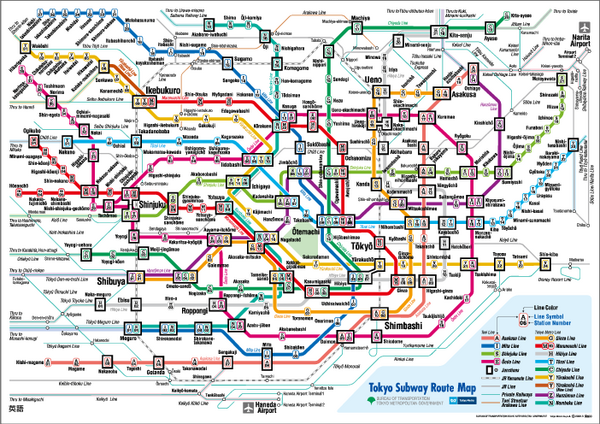
Lastly, the Web Trend Map looks just like the subway map of Tokyo.