Wednesday, July 31, 2013

Module 5 Lectures

On the first lecture, modes of scanning were interesting to me. I think that some people take all four steps when they make a decision, but some people would decide based on limited information.
When I bought my car, I carefully watched TV commercials, searched on the Internet, asked around my friends about their cars and their favorite auto shops. I took the four steps, and did formal search for a few weeks.
On the other hand, my friend stopped by an auto shop on the way back from grocery shopping the other day, and she immediately bought a car there. She did not compare prices in different shops nor look up on the Internet about the average price. She sold her old car when she got the car, and she did not even done undirected viewing about selling her car. When she called her husband about buying a car from the auto shop, he agreed with it without any type of searching.
My friend knows how to use the Internet, has a TV, and has friends to ask around. She told me that she thought it could be a waste of time to do those things. When I reflect the experience, I realize that user’s image of the world and conceptual state of knowledge affect people’s searching behaviors.

On the second lecture, I learned great things from berrypicking model of information behavior. When I was doing research at work, I did not like myself when the initial query changes or evolves over time as different information is encountered along the way. I thought these behaviors came from my lack of searching skill.
I am glad to learn that the information behavior or information search does not happen in a straight line on berrypicking model of information behavior. I think the model is well explained about tendencies. I believe it is important to be known for all information seekers about berry picking model of information behavior.
In the lecture, Dr. Roland said that “we need to realize that we are never going to be able to create the perfect information system that will meet everyone’s needs for 100%.” I agree with him. When I created a database when I was working, I tried to create one that meets everyone’s needs. I worked very hard to find a way that everyone can satisfy the database; however, I realized it was impossible. I believe that it is important to focus the uses of an information system when it is created.

Thursday, July 25, 2013

Module4

My thoughts from the lecture

By listening to the lecture, I realized how information needs keep changing into different style. I also watched the video from the New York Times, The 21st Century Librarian. It was very encouraging! Ms. Rosalia said that where she was in an information desert, the students in the 21st century are in the information ocean, and they are drowning information. I was inspired by her that she expressed how important schools librarians are in order to educate students to become fluent in this modern age.

From the textbook
1.       Weinberger writes at some length regarding the work of Carolus Linnaeus and the organization of biological information. Much like the Dewey Decimal System, Linnaean classification was a very important development in the organization of knowledge, but also inherently flawed because of the knowledge context in which it was created, i.e., prior to the work of Darwin. Post your thoughts to your blog.

On page 73, Weinberger says “Linnaues didn’t think he could resolve such questions finally because he could not read God’s mind…. Linnaeus came up with a highly efficient and orderly way of naming and organizing species, so scientists could agree on what species they were talking about, a condition for scientific progress.”
As it was mentioned previous modules, organizing information sometimes can be against nature. Linnaues is a person who studied and sought how information can be organized through his life and he thought he could not resolve such questions. I was surprised to know that and thought it means a lot. Even though Linnaen classification did not work out well, I agree that it led the organization of knowledge for better. I am sure that every time different kind of classifications was created, there is always something we can learn from them, and combine with other classifications to make a better one.

2.       Weinberger presents Ranganathan as the equivalent of Darwin for Dewey. What are your thoughts, impressions, comments regarding Ranganathan's Five Laws and his Colon Classification System? Post your thoughts to your blog.

I am not sure if Ranganathan is like Darwin of Dewey. The Colon Classification System is hard for me to understand. But I think his Five Laws are very significant. I believe that they are still the fundamental laws in today’s libraries.

Wednesday, July 24, 2013

Textbook Chapter 3

1.     What initial thoughts, reactions, impressions, questions do you have after reading this chapter?

It was interesting to know more about Dewey Decimal System and Amazon. Amazon is something that I am familiar with, so it was easy to understand. Weinberger says “Compared to the neat row of numbered volumes on the shelf of a library, Amazon is a carnival of books, where even the orderly rows of the marching band are interrupted by a weaving conga line of suggestions”. I think this sentence is beautiful and well explained about Amazon, and the differences between DDC system and Amazon. I wonder if there is any way we could combine the two systems and make a better system for libraries.


2.     What are your impressions of Melvil Dewey after reading this chapter from Weinberger?


It was good to know that Dewey assigned books about philosophy the lowest range of numbers because he thinks philosophy laid the foundation for all other studies. I have thought that the Dewey Decimal Classification system was unfair such as eight of the nine major divisions under the religion classification are explicitly for Christian books. It seems unfair, but maybe majority of the books for religions were about Christianity in 1800s. It is clearer to me why DDC system can’t be fixed. I agree with one of the sentences of the book “The world is too diverse for any single classification system to work for everyone in every culture at every time”.


3. Weinberger refers to a “memory palace” on page 52. Share an example of a mnemonic device that you have created and used to help you remember important information.


When I memorize vocabularies, I write them in pieces of paper, and then put them on a wall in my bathroom. Bathroom is where people use frequently, so every time I go there, I naturally look at the vocabularies which help me memorize them.


4. What are your thoughts on Weinberger’s point that the Dewey Decimal System cannot be fixed, p. 56? How should libraries respond?


I agree with Weinberger’s point that the Dewey Decimal System cannot be fixed. It may be, but I can’t think of any ideas.
I think libraries should keep seeking for the best way to organize information. I believe by doing so, we will find a better idea than simply using Dewey Decimal System. 

Tuesday, July 23, 2013

Wikipedia

1. Did this video change your opinion or reinforce your opinion about Wikipedia? Why or why not?

Yes. I knew that Wikipedia was a non-profit foundation, but I didn't know that there was only one system engineer and all other people were volunteers. I used to not like Wikipedia because sometimes the information was prejudiced, yet many people believed in the information.
I changed my opinion because I realized that Wikipedia was founded to have equal access to information to anyone for free. I think it is a wonderful mission and I really like that it is run by volunteers. It is sad that many people believe the information without searching other things though Wikipedia is only a tool to give information so that people can make their own decisions.

2. What do you think of Wales’ comment that an encyclopedia should be radical rather than safe and stodgy? Should the same philosophy apply to libraries?

I think it is fine that Wikipedia is being radical rather than safe and stodgy because it is a free tool and anyone can edit it. I believe as long as it is free and run by volunteers, it can’t be safe and stodgy because it would become boring and loose volunteers.
I do not think the same philosophy apply to libraries. People trust libraries and come to libraries to find reliable information. There are so much data in this world, and I think libraries have to be a place where people can freely access reliable resources for free with ease.

3. What do you think about the Wikipedia policies on neutrality, truth, and objectivity?


I like the idea of the Wikipedia policies on neutrality, truth, and objectivity. I think the policies are achievable for English pages, but it would be hard for minor languages. For English, many people from different countries with various backgrounds can edit pages, but for minor languages such as Japanese, the only people who read Japanese can edit pages. As you know, Japanese is only used in Japan where not much divorce, and toughed things in school certain ways. So when it comes to sensitive topics such as history, it sometimes wouldn't be with neutrality, truth, or objectivity, rather I see intentions of controlling information.

My Thoughts from Module 3 Lecture

I really liked the lecture. Especially the explanation of the differences between data and information was eye opening to me. I thought it was like the differences between noise and sound.

Then one question came up my mind. Is the word “database” should be changed to “information-base”? When I was working, I was in a project to create a database. What I was putting in the database was information, not just data I hope. 

Friday, July 19, 2013

Text book Chapter 2 – Alphabetization and its Discontents

1. What are your thoughts on Mortimer Adler’s stance against alphabetization (p. 30)? What do you think he means by “inherent in all things to be learned we should be able to find inner connections”?
I like Alder’s stance against alphabetization. I understand that people categorize things differently based on their backgrounds or ways of viewing things, but it is much easier to find things using the Propaedia. I have used the Britannica since was small, and I don’t remember having a hard time finding things I needed. My father is an engineer, and he used to buy a few books from the entire Britannica where were related to engineering. I think the topic-based stance enables users to give more flexibility. I think “inherent in all things to be learned we should be able to find inner connections” is very true. Especially for language learning, many teachers suggest students to use paper dictionary instead of digital one because that way students naturally learn related information by looking up the specific topic.

2. What are your thoughts on Weinberger’s last sentences in this chapter: “Now we know that not everything has its place. Everything has its places – the joints at which we choose to bend nature”? Write about some of the joints of nature that are important to you in what you “know” about life and the world. For example, your religious and/or political beliefs.
I agree with Weinberger’s last sentences. Not everything can fit in one place, but they have places to be fit. I think it is natural that some don’t fit in one and that is not a problem. I am not sure if religious or political beliefs matter some of the joints of nature. One joint of nature that is important to me is that connection between each human being and nature. For example, if I drive an electronic car, I can cut air pollution from a car. This action helps other people around me and nature. In other words, we are all connected.

Thursday, July 18, 2013

Module 2- My thoughts on the lectures

I would like to mention about the second lecture, Knowledge in the Age of Abundance. I learned a lot from the lecture; especially how people tend to get only “good enough information”. Also how people tend to limit our own access to the world through the Internet. There were so many things that related to me.

I also realized that I have never thought of appreciating the access I have today. When I think about my life, I am able to attend at Kent State because of the Internet, I can find out how my family and friends are doing through social media, I can gain my knowledge for free from the Internet, etc… There are so many things that I should appreciate.


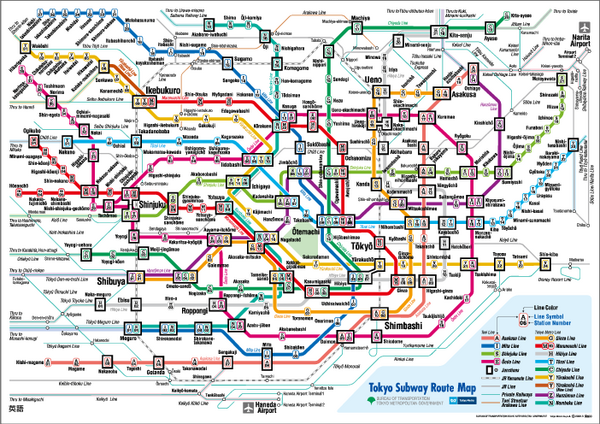
Lastly, the Web Trend Map looks just like the subway map of Tokyo.

Discussion Questions on Textbook Chapter 1

1. Weinberger writes about the difference between finding what you want and discovering what you want within the context of a bookstore. Do libraries do a better job of helping people find and discover what they want or not?

I think libraries sometimes do a better job of helping people find and discover what they want or not. Like me, some people know the general ideas of what they want, but not the specific titles or keywords. By listening to those users, librarians would be able to give them some keywords and lead to them discovers what they want.

2. Weinberger writes on page 14 that the digital world allows us to transcend the fundamental rule of everything having its place because things can now be assigned multiple places simultaneously. This speaks to the very core of library current and continuing existence. What are libraries doing and/or need to do to transcend this fundamental rule in order to stay relevant to information users? Do libraries need to do anything at all?


I think libraries need to be digitalized which most of libraries have done. I also think having a solid database is important. Librarians should be able to use social medias and have knowledge of advanced technologies.

Living Book Assignment

Title: A woman decided to become an archivist

Abstract: How a woman who did not used libraries much in her childhood pursuing MLIS today

Three chapter titles: Archivist, Moving to the U.S., MLIS

The conclusion working towards: A global archivist who can contribute for world peace

TEDTalk video: Kevin Kelly on the next 5,000 days of the web

I had mixed feelings when I watched the video. I understand that everything will become more convenient, which is exciting and I look forward to experiencing new technologies. However, the following questions kept popping in my head. What’s the purpose? Where are we going? We already very a convenient life style, but why do people seek for more? Does it help the people who starve or suffer? Kelly didn't answer any of my questions during his speech.

There are different personalities among people, open-minded who do not mind sharing their information, or completely opposite. I believe we should respect everyone and their ways of thinking about their privacy, and information professionals should aware of it. Kelly didn't mention about respecting transparency or privacy, but I think it is crucial how these are valued. I think that library and information centers will continue having significant roles in society to protect human right by sharing information and protecting privacy.